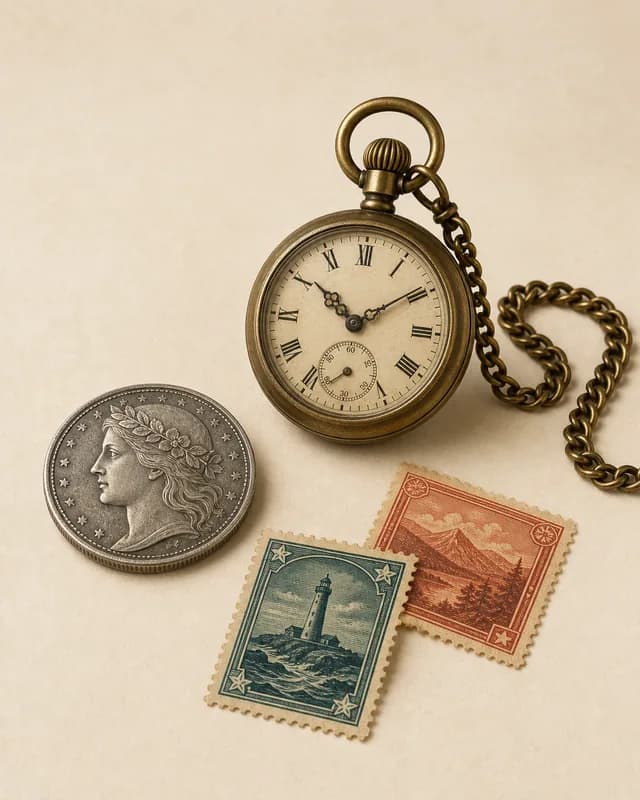
Classic collectibles — tin toys, advertising signs, country-store pieces, early household brands — survived this long mostly by accident. Getting them through the next fifty years is a choice, and the choices are cheap once you know what actually hurts them.
Know your material before you touch it
Lithographed tin, painted cast iron, celluloid, and early plastics each fail differently. Tin litho loses its image to abrasion and rust creep from the edges inward. Cast iron sheds paint when it is knocked, not when it sits. Celluloid warps with heat and can off-gas enough to damage everything stored beside it. Identify the material first; it decides every rule that follows.
The two real enemies: humidity and sunlight
Rust needs moisture, and lithographed color needs darkness more than you think. Keep tin and iron below roughly 50% relative humidity — a small hygrometer costs less than one ruined toy. Ultraviolet light fades printed inks unevenly, which is worse than even fading: a sign that has faded behind a bottle-shaped shadow can lose most of its display value. Indirect light or UV-filtering glass solves it.
Cleaning: less is almost always more
Dust with a soft dry brush, not a cloth — cloth drags grit across the lithograph like sandpaper. Never use metal polish on tin litho; it removes ink along with tarnish. On painted surfaces, test nothing stronger than a barely damp cotton swab in an area that does not show. And leave honest wear alone: a repainted classic toy is usually worth less than a worn original, because collectors buy the surface, not the shape.
Storage that does not backfire
Wrap pieces in acid-free tissue, never in newspaper (the ink transfers) and never in bubble wrap directly against paint (it can lift it, and trapped moisture condenses against metal). Keep pieces from touching each other on the shelf. If a piece came with a box, store the box too — for many classic toys the packaging carries half the value.
Record what you know while you know it
Where a piece was found, what the seller said, the store it originally hung in — provenance evaporates in one generation. Photograph each piece from all sides in even light, record its story, and keep the catalog somewhere it outlives your hard drive. That record is also your insurance documentation the day something happens.
Classic pieces are patient. They only ask that you keep water, sunlight, and enthusiasm with a polishing cloth away from them.