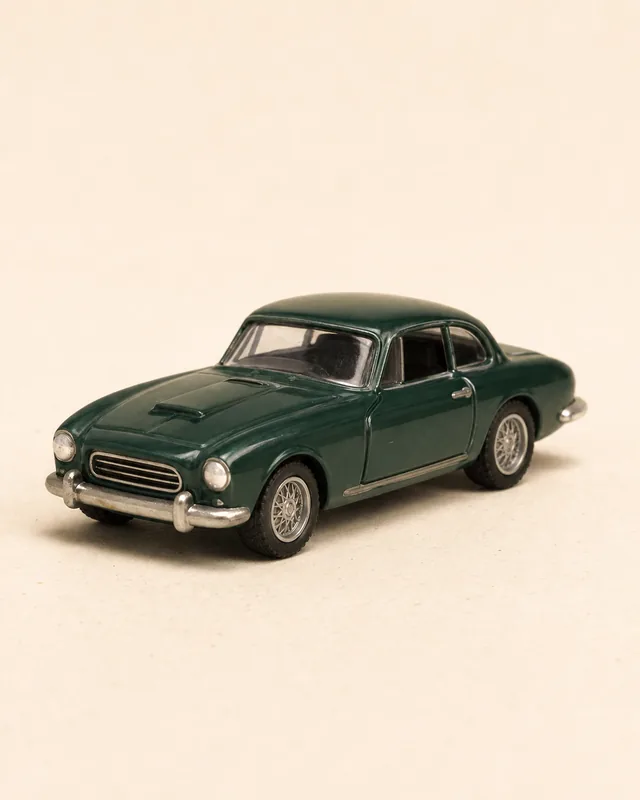
Die-cast is one of the friendliest ways into collecting: the entry price is pocket money, the variety is endless, and the hunt happens everywhere from toy aisles to estate sales. It is also a market with sharp rules about what appreciates and what stays a toy. Here is the map.
Scales, decoded
The scale is the ratio between model and real vehicle. 1:64 — the classic "matchbox size" — dominates the casual market and takes almost no shelf space. 1:43 is the traditional European collector scale, common for racing and rally subjects. 1:24 and 1:18 are display pieces with opening parts and interior detail; one shelf holds a dozen, not a hundred. Pick a primary scale early: mixed-scale shelves look chaotic, and budgets stretch further inside one lane.
Mint on card is a different hobby
The steepest value line in die-cast runs between opened and sealed. A common model loose in a bin is worth cents; the same model sealed on an unpunched card from the right year can be worth serious money. If you collect carded, condition means the card too: corner wear, blister yellowing, and price-sticker damage all count. If you collect loose, relax and enjoy them — just know which game you are playing before you open anything scarce.
Condition language collectors actually use
Loose die-cast is judged on paint chips (especially roof edges and raised details), wheel condition, decal or tampo wear, and metal fatigue in older castings. "Restored" means repainted — honest sellers say so, and a repaint caps value the same way it does for classic toys. Learn to spot swapped wheels and reproduction parts; they are common and fine, as long as they are priced as such.
What appreciates
Errors and short production runs, first editions of long-running castings, dealer promos, and anything tied to a real car that got famous later. Treasure-hunt and chase variants are designed scarcity — they do appreciate, but the market knows exactly what they are. The quiet appreciators are regional castings and discontinued liveries nobody hoarded.
Track the fleet before it outgrows you
Die-cast collections grow in dozens, not units, and duplicates creep in fast when you cannot check the shelf from a store aisle. Photograph each model, record casting name, scale, year, variant, and condition, and keep the list searchable from your phone. Ten minutes of cataloging per haul beats re-buying the same variant twice — every die-cast collector has done it exactly once.
Start with the cars you actually like. The value chase follows taste in this hobby more than it leads it.