Walk through any card show and you'll hear numbers doing the talking: "raw nine at best," "paid strong money for the eight-five," "it came back a seven." Grading — paying a company to inspect an item, score its condition, and seal it in a tamper-evident holder — has become the shared language of condition across cards, coins, and comics. Understanding that language, and knowing when buying into it makes financial sense, is one of the most practical skills a collector can develop.
The core idea is simple: condition drives value, but condition described in words is an argument waiting to happen. "Near mint" means something different to a seller than to a buyer, and something different again on a bad day. A third-party grade replaces the argument with a number that means the same thing to everyone. A PSA 9 in Texas and a PSA 9 in Tokyo are, for market purposes, the same object — and that fungibility is what buyers pay a premium for.
Reading the scales
Trading cards are graded on a ten-point scale by services like PSA, BGS, SGC, and CGC. The graders examine four things — centering, corners, edges, and surface — and the final number reflects the weakest link as much as the average. The jump between high grades is brutal by design: the visible difference between a 9 and a 10 might be one soft corner under magnification, but the price difference on a desirable card can be several multiples.
Coins use the Sheldon scale, running 1 to 70, administered chiefly by PCGS and NGC. Circulated coins occupy the lower ranges, with grades like VF-30 or AU-58 describing progressively less wear. The uncirculated range — Mint State 60 through 70 — is where single points genuinely multiply prices, because at that level the differences are strike quality and microscopic marks invisible to a casual eye.
Comics run 0.5 to 9.9 under CGC and CBCS, with 9.8 functioning as the practical ceiling for most books. Comic grading also weighs page color and structural completeness, and restoration is flagged separately — a restored book carries a distinct label, and the market treats it very differently.
What grading costs, and the only math that matters
Standard-tier grading generally runs somewhere between fifteen and seventy-five dollars per item, with higher declared values pushing fees up and bulk submissions pulling them down. Add shipping both ways, insurance, and — the cost everyone forgets — waiting time that can stretch to months during busy periods.
Whether it's worth it comes down to one line of arithmetic: does the expected graded price exceed the raw price by more than the all-in fee? For a key card in genuinely excellent condition, the answer is usually an emphatic yes — grading can double a strong card's realized price simply by removing the buyer's doubt. For common material in average condition, the answer is almost always no. A ten-dollar card in mint shape is still, after twenty-five dollars of grading, a ten-dollar card in a very nice plastic case.
There's a corollary worth internalizing: grading rewards items where doubt is expensive. High-value items, condition-sensitive items, frequently-faked items — these gain the most from certification. Sentimental items and commons gain nothing but the case.
Before you submit anything
Learn to pre-grade honestly, because the graders will. Examine your item under strong directional light and magnification, and look for what they look for: corner wear, edge chipping, surface scratches, print defects, centering. Compare against the grading standards the services publish, and resist the owner's optimism that rounds every card up a grade.
And never — genuinely never — clean, trim, press, or otherwise "improve" an item before submission. Every major service screens for alteration, they are very good at it, and an alteration finding is worse than any honest low grade. A cleaned coin comes back in a "details" holder that announces the cleaning forever; a trimmed card comes back labeled as trimmed. The attempt to gain a grade costs the item its market.
Photograph everything before it ships, insure the package for the graded value you expect, and keep the submission records.
After the grade: the certificate is data
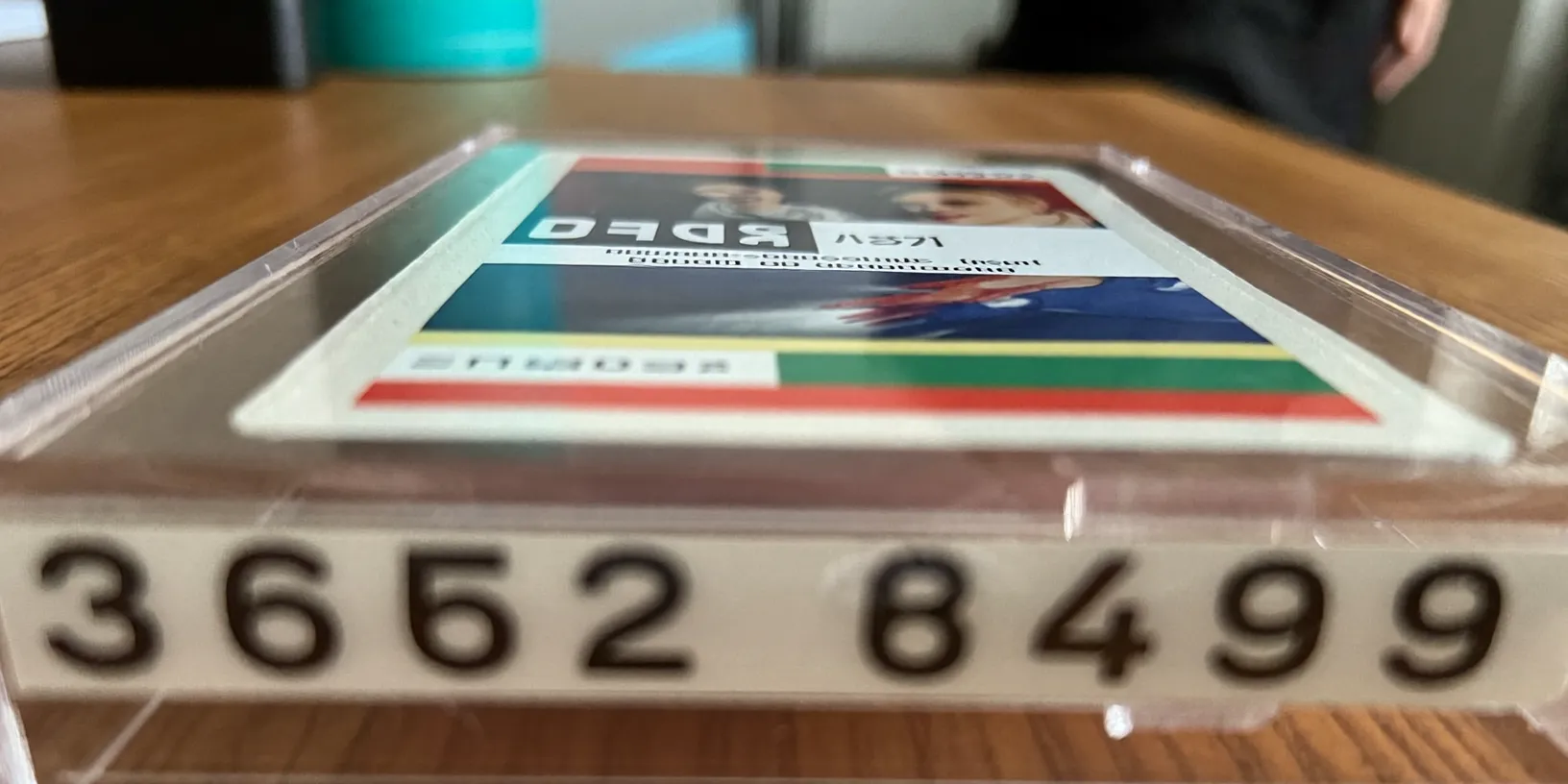
When the slab comes back, the label carries a certification number, and that number is the point. It's verifiable in the service's public database, which transforms the grade from a sticker into checkable evidence — the difference between an expert claim and a story.
Record all of it in your catalog: the grade, the service, the cert number, the date. A graded item whose certification travels with its record is fully documented for sale, insurance, or inheritance — and your catalog quietly becomes what every serious collection eventually needs to be: not just a list of objects, but a file of evidence.