Cards are paper, and paper keeps score. Every summer in a hot attic, every month pressed under a rubber band, every year in a cheap vinyl page — the card records all of it, and the record shows up later as the difference between grades. Since grade differences on desirable cards are worth real money, storage is the cheapest value insurance a collector can buy: a few cents of plastic protecting an asset that may appreciate for decades.
The enemies are few and well understood: light, humidity, heat, acid, and friction. Every one of them is cheap to defeat, and none of them announces the damage while it's happening. That's the treacherous part — a card doesn't look like it's fading or absorbing acid until it visibly has.
The protection ladder
Card protection comes in escalating tiers, and the right tier depends on what the card is worth to you:
- Penny sleeve: a soft polypropylene sleeve costing about a cent. The non-negotiable minimum for any card you care about — its job is stopping surface friction, the everyday micro-scratching that dulls gloss.
- Toploader or semi-rigid holder: stiff plastic that adds bend protection. Always sleeve the card first; a bare card slid into a toploader gets scratched by the very thing protecting it.
- Magnetic holder ("one-touch"): rigid, UV-filtering, display-worthy. The right home for your better cards.
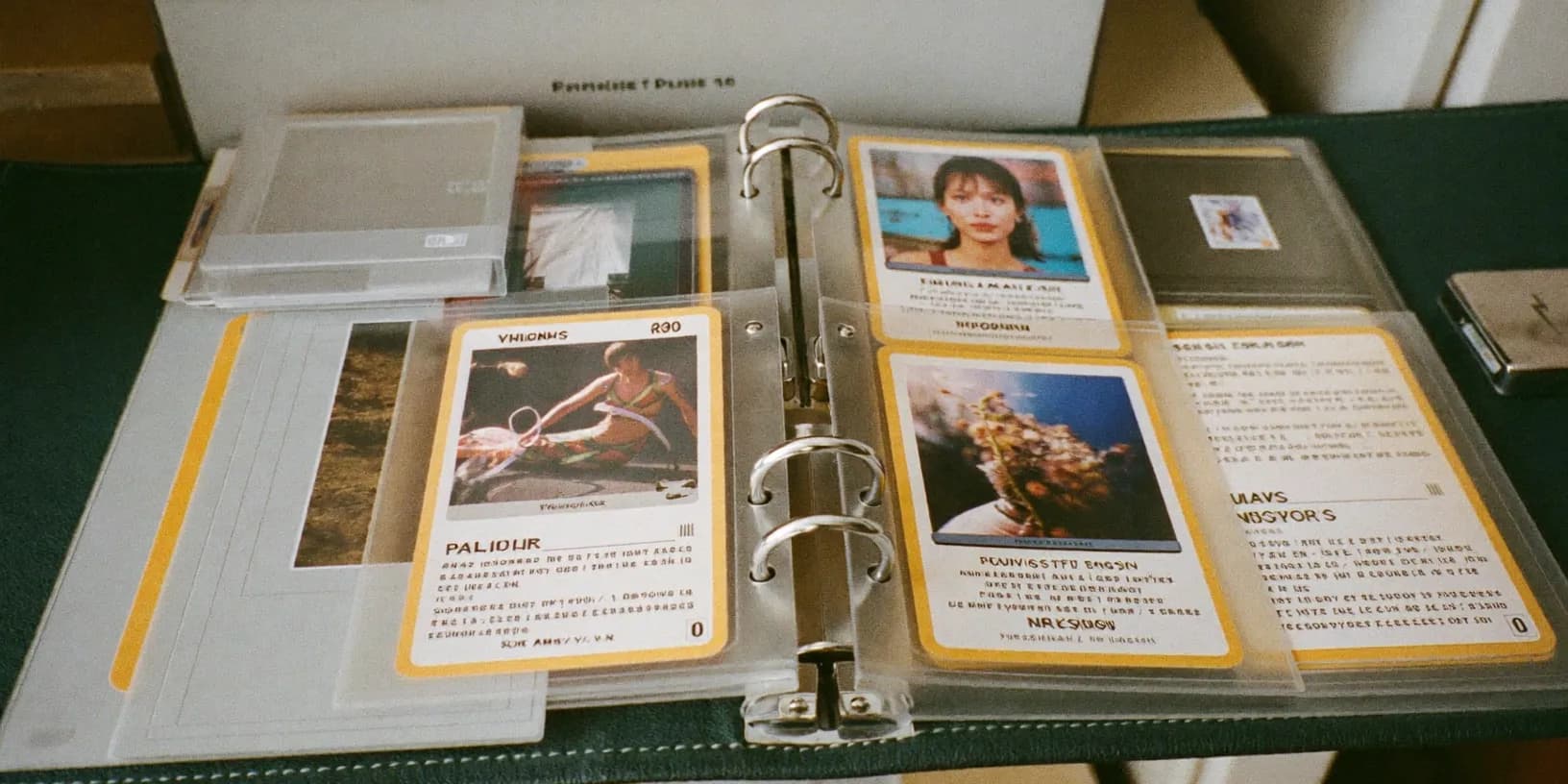
- Binder with side-loading pages: the right answer for sets and collections you flip through. Side-loading specifically — cards fall out of top-loading pages the moment a binder is stored upright.
- Acid-free storage boxes: for bulk, with cards vertical and boxes filled snugly so cards can't lean. Leaning is how boxes full of straight cards slowly become boxes full of warped ones.
The ladder's logic is worth noticing: each tier addresses a different physical threat — friction, then bending, then light, then bulk organization. Matching tier to card value takes thirty seconds and is most of the game.
The environment outranks the plastic
Here is the part that surprises people: a penny-sleeved card in a bedroom closet will outlive a one-touched card in a garage. The environment around the plastic matters more than the plastic.
Cards want what people want — stable, ordinary living conditions, roughly 65 to 72 degrees and 40 to 55 percent humidity. More than the exact numbers, they want stability; it's the swings that do the damage, expanding and contracting the paper season after season. That single fact disqualifies the three most popular storage spots in America: the attic (heat and wild swings), the garage (all of the above plus vehicle exhaust), and the basement (humidity, flooding, and mold). A shelf in a closet inside living space beats all three, for free.
Light is the other silent killer. Direct sunlight visibly fades card fronts in a single season, and it never comes back. Display cards away from windows, ideally in UV-filtering holders, and rotate what you show off.
Two quiet card-ruiners worth naming
Rubber bands did more damage to vintage cards than any flood. They dent the edges of the outer cards within weeks, and over years the rubber chemically degrades and welds itself to card surfaces. If any inherited or long-stored cards are still banded, free them today — carefully, since old bands can be fused on.
The other villain is vintage vinyl: the flexible, slightly oily-feeling PVC pages and sleeves common decades ago. PVC off-gasses plasticizers that migrate into cards, fusing surfaces to the plastic and yellowing them permanently. The tell is the smell — if an old binder page smells like a new shower curtain, that's PVC, and the cards need to come out now. Modern polypropylene and polyester (Mylar) supplies are inert; anything sold as "archival" today is safe, and Mylar is the museum-grade choice for the irreplaceable.
Turn protection day into catalog day
There's a hidden opportunity in a storage upgrade: every card passes through your hands exactly once. That's the perfect moment to catalog — photograph the card, record what it is and what it's worth, note its condition, then sleeve it and shelve it. Protection and documentation in one pass, and the shoebox mystery ("do I have the 1987 rookie or did I sell it?") is solved permanently.
A collection that's protected but undocumented is safe and unknown. Documented but unprotected, it's known and decaying. The re-sleeving session is the cheapest chance you'll ever get to fix both at once — and when it's done, the cards go dark into their boxes while their records stay a tap away, which is exactly how it should be.