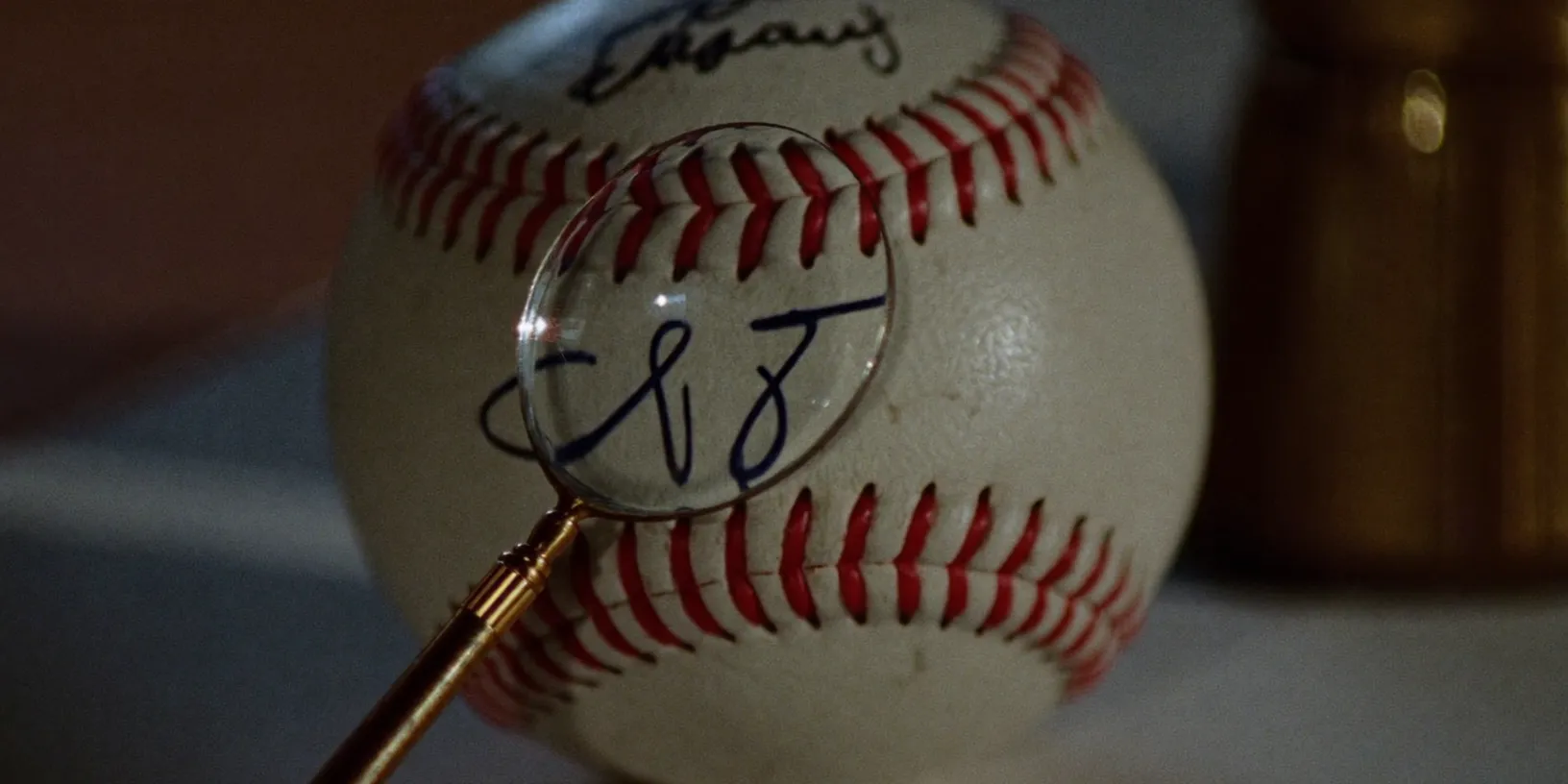
The autograph market runs on an uncomfortable arithmetic: signatures are among the easiest collectibles to fake, the cheapest to fake, and the most profitable to fake — and authentication experts have long estimated that a distressingly large share of raw, uncertified autographs in circulation are not genuine. That sounds like a reason to avoid the hobby. It's actually just a reason to develop a checklist, because the encouraging truth is that most fakes fail the same few tests, and the tests don't require a forensic lab.
What they require is a shift in posture: from "is there a reason to doubt this?" to "is there evidence to believe this?" Genuine autographs can carry that burden. Fakes usually can't carry it past the second question.
Machine fakes: the printer and the autopen
The most industrial fakes aren't hand-forged at all. Printed "signatures" — common on mass-market photos — reveal themselves under any decent magnification: the line resolves into a pattern of dots, because it's an image of ink rather than ink. A real pen stroke pools slightly, feathers microscopically into the paper fibers, and sometimes indents the surface. A loupe answers the print question in ten seconds, which is why sellers of printed signatures dislike loupes.
The autopen — a machine that replays a real signature with a real pen — is subtler but has its own tells. Machine arms move at constant speed and pressure, so autopen lines have an eerily uniform width, with none of the thick-thin variation a human hand produces on curves and flourishes. They often start and stop with a small blob or dot, where the pen touched down and lifted while stationary. And because the machine replays the same template, autopen signatures match each other exactly. That produces the golden rule of comparison: finding another signature identical to yours is not confirmation. It's condemnation. No human signs their name the same way twice at that level of precision.
Human fakes: forgery is slow, and slow shows
A hand forgery is usually a drawing of a signature — traced or carefully copied — and drawing is slow. Slowness leaves fingerprints: wavering lines where the real signer's hand moved in one confident sweep, hesitation marks at direction changes, tiny pen lifts mid-stroke where the forger checked the exemplar, occasional retouching where a line got "fixed." A genuine signature, by contrast, was executed in a second or two by someone who had signed that name ten thousand times. It has speed in it. Under magnification, speed looks like smooth, tapering, variable-pressure strokes that don't second-guess themselves.
Context does the rest of the human-side screening. Signatures evolve across a signer's life — the crisp full autograph of a 1960s rookie becomes the abbreviated scrawl of a 1990s veteran — so compare against dated exemplars from the same era as your item. A 2015-style signature on a 1970s photo needs an explanation. So does a bargain: desirable autographs have well-established market prices, and "way below market" is itself evidence about authenticity.
Provenance outranks analysis
Everything above examines the ink. The stronger evidence usually sits next to it. A signature accompanied by a photograph of the signing, a dated ticket stub from the game, a letter from the original recipient describing the encounter — that documentation outranks any visual inspection, because it addresses the only question that matters: how did this signature come to exist?
This is why the story deserves to be recorded with the same care as the object. "Obtained in person at spring training, March 1998 — here's the program from that day" is what real provenance looks like in a catalog entry. If you get items signed yourself, build the file in real time: photo of the moment, date, event, kept permanently with the item's record. You're not just collecting a signature; you're manufacturing its evidence.
Certification: valuable, and worth verifying
For significant signatures, third-party authentication from the recognized services — PSA/DNA, JSA, Beckett — is the market standard, and their opinion plus a tamper-evident label is what serious buyers expect. But the certification ecosystem has its own fakes, so apply the final check: a genuine cert carries a number verifiable in the issuer's public database. Check it. A "Certificate of Authenticity" from an unknown issuer, no matter how much gold foil it wears, is decoration — the COA is only as credible as the name signing it, which is a pleasingly recursive rule for an autograph collector to remember.
And when analysis, context, and paperwork still leave you unsure, ask the community. Collectors who specialize in a particular signer have seen hundreds of genuine examples and every common forgery of them; a clear photo posted to the right people often gets a confident answer, with reasoning, in hours. Skepticism plus evidence plus other collectors' eyes — that combination catches nearly everything the fakers can produce.